Sunday, 19 January 2014

Wireless sensor network -2

Wireless sensor network -2


Applications

The applications for WSNs are many and varied, but typically involve some kind of monitoring, tracking, and controlling. Specific applications for WSNs include habitat monitoring, object tracking, nuclear reactor control, fire detection, and traffic monitoring. In a typical application, a WSN is scattered in a region where it is meant to collect data through its sensor nodes.

Area monitoring

Area monitoring is a common application of WSNs. In area monitoring, the WSN is deployed over a region where some phenomenon is to be monitored. As an example, a large quantity of sensor nodes could be deployed over a battlefield to detect enemy intrusion instead of using landmines[1]. When the sensors detect the event being monitored (heat, pressure, sound, light, electro-magnetic field, vibration, etc), the event needs to be reported to one of the base stations, which can take appropriate action (e.g., send a message on the internet or to a satellite). Depending on the exact application, different objective functions will require different data-propagation strategies, depending on things such as need for real-time response, redundancy of the data (which can be tackled via data aggregation techniques), need for security, etc.

Characteristics This article does not cite any references or sources.
Please help improve this article by adding citations to reliable sources. Unverifiable material may be challenged and removed. (August 2006)


Unique characteristics of a WSN include:
Limited power they can harvest or store
Ability to withstand harsh environmental conditions
Ability to cope with node failures
Mobility of nodes
Dynamic network topology
Communication failures
Heterogeneity of nodes
Large scale of deployment
Unattended operation

Sensor nodes can be imagined as small computers, extremely basic in terms of their interfaces and their components. They usually consist of a processing unit with limited computational power and limited memory, sensors (including specific conditioning circuitry), a communication device (usually radio transceivers or alternatively optical), and a power source usually in the form of a battery. Other possible inclusions are energy harvesting modules, secondary ASICs, and possibly secondary communication devices (e.g. RS-232 or USB).

The base stations are one or more distinguished components of the WSN with much more computational, energy and communication resources. They act as a gateway between sensor nodes and the end user.

Platforms

Standards

Several standards are currently either ratified or under development for wireless sensor networks. ZigBee is a mesh-networking standard intended for uses such as industrial control, embedded sensing, medical data collection, building automation. Zigbee is promoted by a large consortium of industry players. WirelessHART is an extension of the HART Protocol and is pecifically designed for Process Monitoring and Control. WirelessHART was added to the overall HART protocol suite as part of the HART 7 Specification, which was approved by the HART Communication Foundation in June 2007[4]. 6lowpan [5] is a proposed standard for the Network Layer, but it has not been adopted yet. ISA100 is a new standard under development that includes WSN[citation needed]. ISA100 is scheduled for completion by year-end 2008. WirelessHART, ISA100, and ZigBee all are based on the same standard: IEEE 802.15.4 - 2005.

Hardware
Main article: sensor node

The main challenge is to produce low cost and tiny sensor nodes. With respect to these objectives, current sensor nodes are mainly prototypes. Miniaturization and low cost are understood to follow from recent and future progress in the fields of MEMS and NEMS. Some of the existing sensor nodes are given below. Some of the nodes are still in research stage.

An overview of commonly used sensor network platforms, components, technology and related topics is available in the SNM - Sensor Network Museumtm.
Software

Energy is the scarcest resource of WSN nodes, and it determines the lifetime of WSNs. WSNs are meant to be deployed in large numbers in various environments, including remote and hostile regions, with ad-hoc communications as key. For this reason, algorithms and protocols need to address the following issues:
Lifetime maximization
Robustness and fault tolerance
Self-configuration

Some of the "hot" topics in WSN software research are:
Security
Mobility (when sensor nodes or base stations are moving)
Middleware: the design of middle-level primitives between the software and the hardware

Wireless sensor network 1


Wireless sensor network

From Wikipedia, the free encyclopedia
  (Redirected from Wireless Sensor Network)
"WSN" redirects here. For the sports website, see WSN.com.
"WSN" redirects here. For the metasyntax, see Wirth syntax notation.         This article or section seems to contain embedded lists that may require cleanup.
To meet Wikipedia's style guidelines, please help improve this article by: removing items which are not notable, encyclopedic, or helpful from the list(s); incorporating appropriate items into the main body of the article; and discussing this issue on the talk page.


Typical Multihop Wireless Sensor Network Architecture

A wireless sensor network (WSN) is a wireless network consisting of spatially distributed autonomous devices using sensors to cooperatively monitor physical or environmental conditions, such as temperature, sound, vibration, pressure, motion or pollutants, at different locations.[1][2] The development of wireless sensor networks was originally motivated by military applications such as battlefield surveillance. However, wireless sensor networks are now used in many civilian application areas, including environment and habitat monitoring, healthcare applications, home automation, and traffic control.[1][3]

In addition to one or more sensors, each node in a sensor network is typically equipped with a radio transceiver or other wireless communications device, a small microcontroller, and an energy source, usually a battery. The envisaged size of a single sensor node can vary from shoebox-sized nodes down to devices the size of grain of dust,[1] although functioning 'motes' of genuine microscopic dimensions have yet to be created. The cost of sensor nodes is similarly variable, ranging from hundreds of dollars to a few cents, depending on the size of the sensor network and the complexity required of individual sensor nodes.[1] Size and cost constraints on sensor nodes result in corresponding constraints on resources such as energy, memory, computational speed and bandwidth.[1]

A sensor network normally constitutes a wireless ad-hoc network, meaning that each sensor supports a multi-hop routing algorithm (several nodes may forward data packets to the base station).

In computer science and telecommunications, wireless sensor networks are an active research area with numerous workshops and conferences arranged each year.Contents [hide]
1 Applications
1.1 Area monitoring
2 Characteristics
3 Platforms
3.1 Standards
3.2 Hardware
3.3 Software
3.3.1 Operating systems
3.3.2 Middleware
3.3.3 Programming languages
3.3.4 Algorithms
4 Simulators
5 Data visualization
6 Conferences
7 See also
8 References
9 Further reading
9.1 Journals
10 External links


Friday, 17 January 2014

C.N.R. Rao - 2

 C.N.R. Rao - 2


Profession

Rao returned to Bangalore in 1959 to join IISC as a lecturer. He got a monthly salary of Rs 500. He started his own research with six PhD students. After three years he got permanent appointment in the Department of Chemistry at the Indian Institute of Technology Kanpur. The Director P.K. Kelkar directly appointed him as Head of the department. He worked there from 1963 to 1976. In 1964, C.V. Raman informed him that he was elected as a fellow of the Indian Academy of Sciences. In 1976 he returned to IISc to set up a solid state and structural chemistry unit. He became Director of the IISc from 1984 to 1994. He has also been a visiting professor at Purdue University, the University of Oxford, the University of Cambridge and University of California, Santa Barbara. He was the Jawaharlal Nehru Professor at the University of Cambridge and Professorial Fellow at the King's College, Cambridge during 1983-1984. Rao is currently the National Research Professor, Linus Pauling Research Professor and Honorary President of Jawaharlal Nehru Centre for Advanced Scientific Research,Bangalore which he founded in 1989. He was appointed Chair of the Scientific Advisory Council to the Indian Prime Minister in January 2005, a position which he had
occupied earlier during 1985–89. He is also the director of the International Centre for Materials Science (ICMS). Rao is one of the world's foremost solid state and materials chemists. He has contributed to the development of the field over five decades. His work on transition metal oxides has led to basic understanding of novel phenomena and the relationship between materials properties and the structural chemistry of these materials. Rao was one of the earliest to synthesize two-dimensional oxide materials such as La2CuO4. His work has led to a systematic study of compositionally controlled metal-insulator transitions. Such studies have had a profound impact in application fields such as colossal magneto resistance and high temperature superconductivity. Oxide semiconductors have unusual promise. He has made immense contributions to nanomaterials over the last two decades, besides his work on hybrid materials.
He is the author of around 1500 research papers. He has authored and edited 45 books. Rao serves on the board of the Science Initiative Group.

Awards and recognition

• DSc from Mysore University in 1961
• Marlow Medal by the Faraday Society of England in 1967
• Shanti Swarup Bhatnagar Prize for Science and Technology in Chemical Science in 1968
• Padma Shri in 1974
• Royal Society of Chemistry (London) Medal in 1981
• Member of many of the world's scientific associations, including the National Academy of Sciences, American Academy of Arts and Sciences, the Royal Society (London, 1982), French Academy, Japanese Academy, Serbian Academy of Sciences and Arts and the Pontifical Academy.
• Honorary doctorates from several universities including Bordeaux, Caen, Colorado, Khartoum, Liverpool,
Northwestern, Novosibirsk, Oxford, Purdue, Stellenbosch, Universite Joseph Fourier, Wales, Wroclaw, Notre Dame, Uppsala, Aligarh Muslim, Anna, AP, Banaras, Bengal Engineering, Bangalore, Burdwan, Bundelkhand, Delhi, Hyderabad, IGNOU, IIT Bombay, Kharagpur, Delhi, Patna, JNTU, Kalyani, Karnataka, Kolkata, Kuvempu, Lucknow, Mangalore, Manipur, Mysore, Osmania, Punjab, Roorkee, Sikkim Manipal, SRM, Tumkur, Sri Venkateswara, Vidyasagar, and Visveswaraya Technological University.
• Padma Vibhushan in 1985
• Hevrovsky Gold Medal of the Czechoslovak Academy of Sciences in 1989
• Centenary Medal of the Royal Society of Chemistry, London in 2000
• Hughes Medal by the Royal Society in 2000
• Karnataka Ratna by the Karnataka State Government in 2001[1]
• Great Cross of the National Order of Scientific Merit from the President of Brazil in 2002
• Doctor of Science from University of Calcutta in 2004[2]
• Somiya Award of the International Union of Materials Research in 2004
• India Science Award in 2004
• Dan David Prize from Tel Aviv University in 2005[3] shared with George Whitesides and Robert Langer.
• Chevalier de la Légion d'honneur (Knight of the Legion of Honour, France) in 2005
• Foreign fellow of Bangladesh Academy of Sciences[4]
• Nikkei Asia Prize for Science, Technology and Innovation, by Nihon Keizai Shimbun, Inc., Japan in 2008
• Order of Friendship by the President of Russia in 2009
• Royal Medal by the Royal Society in 2009
• August-Wilhelm-von-Hofmann Medal by the German Chemical Society in 2010.
• Ernesto Illy Trieste Science Prize for materials research in 2011
• 2012 Award for International Scientific Cooperation from the Chinese Academy of Sciences in 2013[5]
• Elected honorary foreign member of Chinese Academy of Sciences in 2013
• Distinguished Academician Award from IIT Patna in 2013[6]
• Bharat Ratna in 2013

Personal life
Rao is married to Indumati Rao in 1960. They have two children, Sanjay and Suchitra. His son Sanjay Rao is engaged in popularising science in Bangalore's schools. His daughter Suchitra is married to K.M. Ganesh, the director of the Indian Institute of Science Education and Research (IISER) at Pune, Maharashtra. Rao is quite technophobic. He removed computers from his tables and never check his email by himself. He also said that he uses mobile phone only for talking to his wife.

Controversies

He has been accused of indulging and allowing plagiarism. In December 2011, C. N. R. Rao apologized to Advanced Materials – a peer-reviewed journal, for reproducing text of other scientists in his research paper. His collaborator and the other senior author of the paper S. B. Krupanidhi accused a co-author PhD student at IISc for the mistake, “These sentences were part of the introduction of the paper, which was written by our student, that neither of us (namely, the senior authors, Rao and Krupanidhi) paid attention to”.
The PhD student took the responsibility for the incident and issued an apology. Later Rao offered to withdraw the article from the journal, but the editor let the publication stay as it is. Rao claimed to have never indulged in plagiarism. Later few more instances of plagiarism by Rao and his collaborators were reported. Rao was criticised by an Indian scientist for these incidents and passing the responsibility to the junior scientists. On 17 November 2013, at a press conference following the announcement of his Bharat Ratna, he called the Indian politicians "idiots" that caused a national outrage. He said, "Why the hell have these idiots [politicians] given so little to us despite what we have done. For the money that the government has given us we [scientists] have done much more." In his defence Rao insisted that he merely talked about the "idiotic" way the politicians ignore investments for research funding in science.

C. N. R. Rao - 1

C. N. R. Rao

Born 30 June 1934
Bangalore, Kingdom of Mysore, British India
Residence India
Nationality Indian
Fields Chemistry
Institutions Indian Space Research Organization
IIT Kanpur
Indian Institute of Science
University of Oxford
University of Cambridge
University of California, Santa Barbara
Jawaharlal Nehru Centre for Advanced Scientific Research
Alma mater Mysore University
Banaras Hindu University
Purdue University
Known for Solid-state chemistry
Materials science
Notable awards Hughes Medal (2000)
India Science Award (2004)
(FRS) (1984)
Abdus Salam Medal (2008)
Dan David Prize (2005)
Legion of Honor (2005)
Padma Shri (1974)
Padma Vibhushan (1985)
Bharat Ratna (2013)

Chintamani Nagesa Ramachandra Rao FRS, also known as C.N.R. Rao (born 30 June 1934), is an Indian chemist who has worked mainly in solid-state and structural chemistry. He currently serves as the Head of the Scientific Advisory Council to the Prime Minister of India. Rao has honorary doctorates from 60 universities from around the world. He has authored around 1,500 research papers and 45 scientific books. He is the recipient of most of the major scientific awards, and is member of all major scientific organisations. On 16 November 2013, the Government of India conferred him Bharat Ratna, the highest civilian award in India, making him the fourth scientist after C.V. Raman, Visvesvaraya and A. P. J. Abdul Kalam to get the award.


Early life and education

C.N.R. Rao was born in Bangalore in a Kannada family to Hanumantha Nagesa Rao and Nagamma Nagesa Rao. He was an only child, and his learned parents made an academic environment. He was well versed in Hindu literature from his mother and in English from his father at an early age. He did not attend elementary school but was home-tutored by his mother, who was particularly skilled in arithmetic and Hindu literature. He entered midddle school in 1940, at age six. Although he was the youngest in his class, he used to tutor his classmates in mathematics and English. He passed lower secondary examination (class VII) in first class in 1944. He was ten years old, and his father rewarded him with four annas (twenty-five paisa). He attended Acharya Patashala high school in Basavanagudi, which made a lasting influence on his interest in chemistry. His father enrolled him to a Kannada-medium course to encourage his mother tongue, but at home used English for all conversation. He completed secondary school leaving certificate in first class in 1947. He studied BSc at Central College, Bangalore. Here he developed his communication skills in English and also learnt Sanskrit. He obtained his bachelor's degree from Mysore University in 1951, in first class, and only at the age of seventeen. He initially thought of joining Indian Institute of Science (IISc) for a diploma or a postgraduate degree in chemical engineering, but a teacher persuaded him to attend Banaras Hindu University. He obtained a master's in chemistry from BHU two years later. In 1953 he was granted a scholarship for PhD in IIT Kharagpur. But four foreign universities, MIT, Penn State, Columbia and
Purdue also offered him financial support. He chose Purdue. His first research paper was published in the Agra University Journal of Research in 1954. He completed PhD in 1958, only after two years and nine months, at age twenty-four.


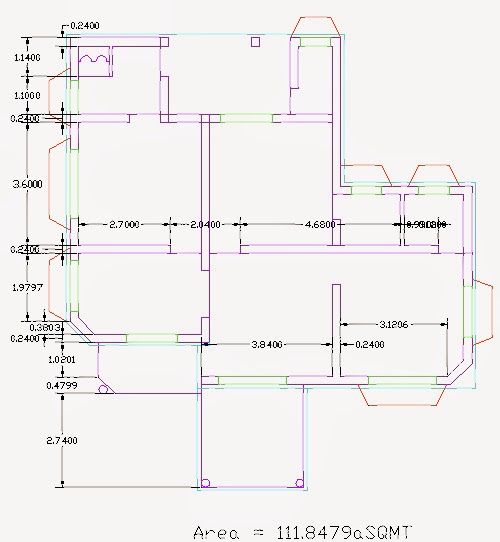
DREAM HOME PLAN-10

DREAM HOME PLAN-10


PLAN,ELEVATION AND SECTION


DREAM HOME PLAN-9

DREAM HOME PLAN-9


PLAN,ELEVATION AND SECTION

DREAM HOME PLAN-8

DREAM HOME PLAN-8


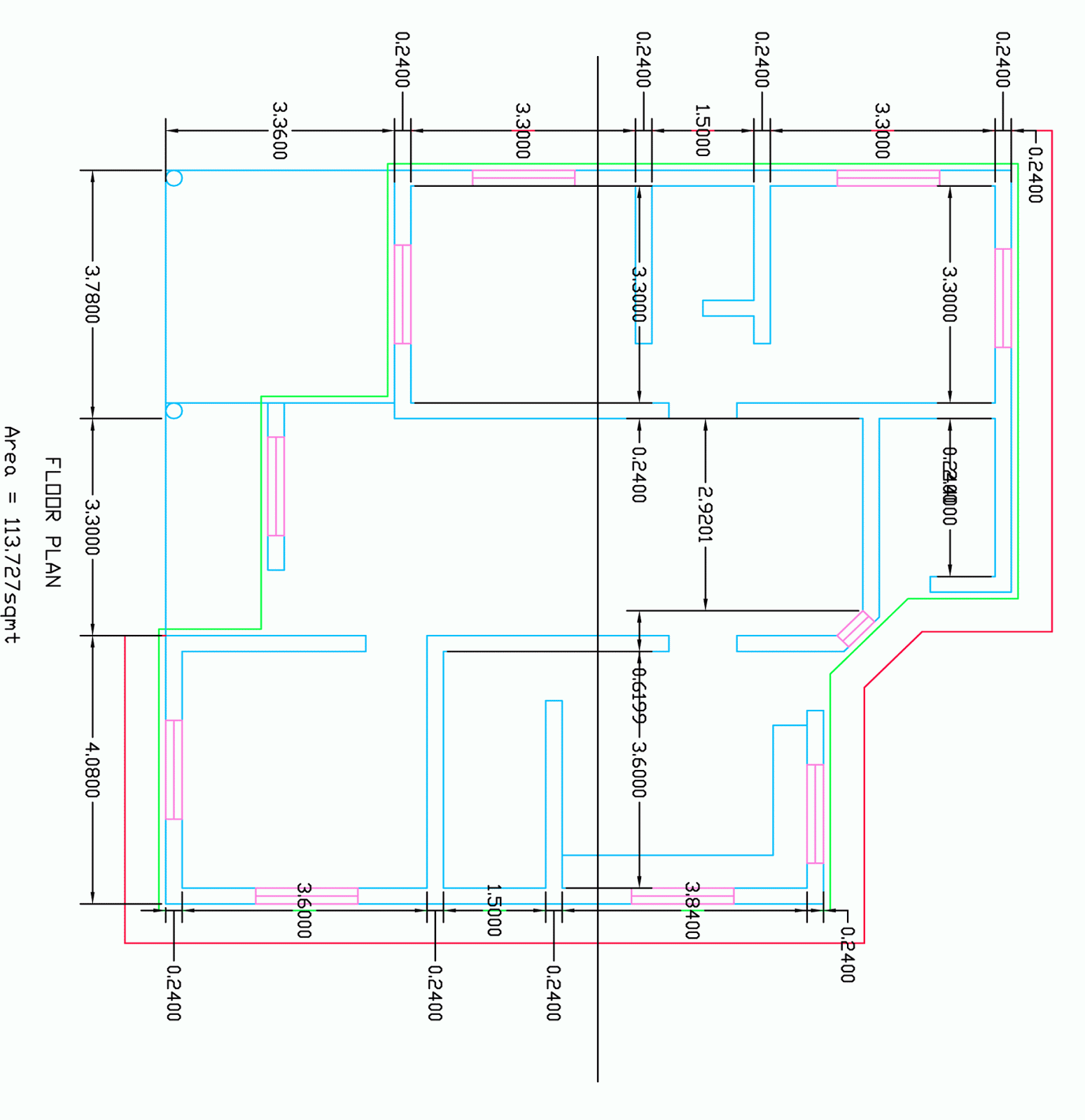
FLOOR PLAN


FIRST FLOOR


PLAN,ELEVATION AND SECTION


DREAM HOME PLAN-7

DREAM HOME PLAN-7


PLAN,ELEVATION AND SECTION


DREAM HOME PLAN-6

DREAM HOME PLAN-6


ground floor


PLAN,ELEVATION AND SECTION